Aug 31, 2009

Does breastfeeding protect babies from this new flu virus?

There are many ways that breastfeeding and breast milk protect babies’ health. Flu can be very serious in young babies. Babies who are not breastfed get sick from infections like the flu more often and more severely than babies who are breastfed.

Since this is a new virus, we don’t know yet about specific protection against it. Mothers pass on protective antibodies to their baby during breastfeeding. Antibodies are a type of protein made by the immune system in the body. Antibodies help fight off infection.

If you are sick with flu and are breastfeeding, someone who is not sick can give your baby your expressed milk.

Is it ok to for me to feed my baby if I am sick?

Infants are thought to be at higher risk for severe illness from novel influenza A (H1N1) infection and very little is known about prevention of novel H1N1 flu infection in infants. If you are breastfeeding or giving your baby infant formula, a cautious approach would be to protect your baby from exposure to the flu virus in the following ways:

  • Ask for help from someone who is not sick to feed and care for your baby, if possible.
  • If there is no one else who can take care of your baby while you are sick, try to wear a face mask at all times when you are feeding or caring for your baby. You should also be very careful about washing your hands and taking everyday precautions to prevent your baby from getting flu (http://www.cdc.gov/flu/protect/habits.htm). Using a cloth blanket between you and your baby during feedings might also help.
  • If you are breastfeeding, someone who is not sick can give your baby your expressed milk. Ideally babies less than about 6 months of age should get their feedings from breast milk. It is OK to take medicines to treat the flu while you are breastfeeding.

What can I do to protect my baby?

Take everyday precautions such as washing your hands with plain soap and water or using an alcohol-based hand rub before feeding your baby. More tips on good health habits for preventing sickness from the flu virus can be found at this website: http://www.cdc.gov/flu/protect/habits.htm. In addition, try not to cough or sneeze in the baby’s face while feeding your baby, or any other time you and your baby are close. If possible, only family members who are not sick should care for infants. If you are sick and there is no one else to care for your baby, wear a facemask, if available and tolerable, and cover your mouth and nose with a tissue when coughing or sneezing. For more information, see the Interim Recommendations for Facemask and Respirator Use.

What is this new flu virus?

This novel H1N1 flu virus (sometimes called “swine flu”) was first detected in people in April 2009 in the United States. This virus is spreading from person-to-person, probably in much the same way that regular seasonal influenza viruses spread.

Novel H1N1 Flu (Swine Flu) and Feeding your Baby: What Parents Should Know

This document updates previously posted information for parents about infant feeding and novel H1N1 flu (swine flu). It now more clearly addresses parents who are formula feeding as well as breastfeeding, suggests that parents sick with novel H1N1 flu (swine flu) find someone who is not sick to feed the baby, and provides more detailed strategies for breastfeeding mothers to maintain breastfeeding throughout the course of infection. This document is based on current knowledge of the novel H1N1 flu outbreak in the United States, and may be revised as more information becomes available.

H1N1 Flu (Swine Flu)

Also called: Swine flu

Swine flu is an infection caused by a virus. It's named for a virus that pigs can get. People do not normally get swine flu, but human infections can and do happen. The virus is contagious and can spread from human to human. Symptoms of swine flu in people are similar to the symptoms of regular human flu and include fever, cough, sore throat, body aches, headache, chills and fatigue.

There are antiviral medicines you can take to prevent or treat swine flu. There is no vaccine available right now to protect against swine flu. You can help prevent the spread of germs that cause respiratory illnesses like influenza by

  • Covering your nose and mouth with a tissue when you cough or sneeze. Throw the tissue in the trash after you use it.
  • Washing your hands often with soap and water, especially after you cough or sneeze. You can also use alcohol-based hand cleaners.
  • Avoiding touching your eyes, nose or mouth. Germs spread this way.
  • Trying to avoid close contact with sick people.
  • Staying home from work or school if you are sick.

Swine flu information leaflets and videos

Swine flu information leaflets and videos

Flu video

There's a simple way to remember this: CATCH IT. BIN IT. KILL IT.

As well as the standard English version, the Swine Flu Information leaflet is also available in more than 15 other languages.

Large print and spoken versions are available for people who have difficulty reading, as is a Braille copy for the partially sighted. There is also a British Sign Language version for the hearing impaired.

You can also watch the TV advert.

Do you have swine flu (influenza A H1N1)?

Symptoms of swine flu include a fever, cough, headache, weakness and fatigue, aching muscles and joints, sore throat and a runny nose.

Learn how to check if you have swine flu and who is most at risk.

Treatment and prevention

If you are in England, you can now get antivirals to treat swine flu from a local collection point without seeing your GP. If you are in Scotland, Wales or Northern Ireland, contact your GP or call your specific helpline.

Groups that will be given priority for the swine flu vaccine have been announced. These include pregnant women and people with serious underlying health conditions.

You can also find tips on how to reduce your risk of catching swine flu.

Pregnant women and parents

While most pregnant women with swine flu will only have mild symptoms like most other people, there is a higher risk of developing complications. Pregnant women will be given priority for the swine flu vaccine when it is available in the Autumn.

Follow these simple tips to keep yourself and your child safe.

Travel advice

If you have swine flu, do not travel until after your symptoms have stopped.

If you need to cancel your holiday, keep all the original documentation you receive, including the label from your medication, as insurers will need it to validate your travel insurance claim.

Travelling to the UK

While there have been cases of swine flu in the UK, travel to the UK is not restricted.

If you get swine flu while in the UK you will be able to access the same advice and treatment as UK residents. However, if you have symptoms of swine flu, you should delay travelling until you are well.

Government action

The National Pandemic Flu Service has been launched, with antivirals available at local collection points. If you feel like you may have swine flu, visit the new website by following the link below, or call 0800 1 513 100.

Find out what else the government is doing to help combat swine flu and protect everyone living in the UK.

Latest news About Swine Flu

The number of cases of swine flu in England has continued to fall. The Health Protection Agency estimates there were 11,000 new cases in England last week, compared with 25,000 the week before.

Cases of swine flu have fallen in all age groups and in all regions. The disease has been generally mild in most people so far, but is proving severe in a small minority of cases.

Swine flu vaccine

The government has announced that priority for the swine flu vaccine will be given to at-risk groups. These include pregnant women and people with serious underlying health conditions.

Vaccinations for these groups are expected to begin in the autumn. Steps are being taken to extend the vaccination programme to other people once this stage has been completed.

Check your symptoms

Contact your doctor directly rather than using the National Pandemic Flu Service if:

  • you have a serious underlying illness
  • you are pregnant
  • you have a sick child under one year old
  • your condition suddenly gets much worse
  • your condition is still getting worse after seven days (five for a child)

Scotland, Wales and Northern Ireland

If you are in Scotland, Wales or Northern Ireland the advice is different.

Follow the 'information around the UK' link below.

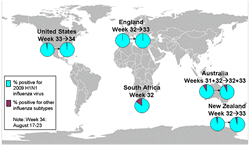
2009 H1N1 Flu: International Situation Updated now

This situation report provides an update to the international situation as of August 28, 2009. As of August 23, the World Health Organization (WHO) regions have reported over 209,438 laboratory-confirmed cases of 2009 H1N1 influenza virus (2009 H1N1) with at least 2,185 deaths. The laboratory-confirmed cases represent an underestimation of total cases in the world as many countries now focus surveillance and laboratory testing only in persons with severe illness. The 2009 H1N1 influenza virus continues to be the dominant influenza virus in circulation in the world. Decreases in disease due to 2009 H1N1 continue to be reported from South America and parts of Australia. The United Kingdom is also reporting national decreases in disease due to 2009 H1N1. In contrast, disease associated with 2009 H1N1 influenza is continuing to increase in southern Africa and more Africa countries have reported their first cases. In addition, 2009 H1N1 continues to circulate in tropical countries.

Selected Highlights

  • The 2009 H1N1 influenza virus is the predominant influenza virus in circulation worldwide.
  • The epidemiology of the disease caused by the 2009 H1N1 influenza virus in the Southern Hemisphere is very similar to that described in the United States this past spring.
  • There have been no significant changes detected in the 2009 H1N1 influenza virus isolated from persons in the Southern Hemisphere as compared to viruses isolated from persons in the Northern Hemisphere.

Swine flu - everything you need to know

The sections below provide health and travel advice and more information on what swine flu is, what to do if you think you have it and what the government is doing to help combat it.

National Pandemic Flu Service

Flu information: 0800 1 513 513, flu treatment 0800 1 513 100

The National Pandemic Flu Service has been launched in England.

If you are in England and feel like you may have swine flu, visit the new website by following the link below, or call 0800 1 513 100 (textphone - 0800 1 513 200).

People who have swine flu symptoms will be given a unique access number and told where their nearest antiviral collection point is. They should then ask a flu friend - a friend or relative who doesn't have swine flu - to go and pick up their antivirals from their nearest antiviral collection point. The flu friend must show their own ID as well as that of the patient.

2009 H1N1 Flu: Situation Update

Key Flu Indicators

Each week CDC analyzes information about influenza disease activity in the United States and publishes findings of key flu indicators in a report called FluView. During the week of August 16-22, 2009, a review of these key indictors found that influenza activity is either stable, or is increasing in some areas. Activity appears to be increasing in the Southeast based on influenza-like illness data reported by health care providers. Below is a summary of the most recent key indicators:

  • Visits to doctors for influenza-like illness (ILI) were highest in February during the 2008-09 flu season, but rose again in April 2009 after the new H1N1 virus emerged. Current visits to doctors for influenza-like illness are down from April, but are higher than what is expected in the summer and has increased over the last two weeks.
  • Total influenza hospitalization rates for adults and children are similar to or lower than seasonal influenza hospitalization rates depending on age group.
  • The proportion of deaths attributed to pneumonia and influenza (P&I) was low and within the bounds of what is expected in the summer.
  • Most state health officials are reporting regional or sporadic influenza activity. Two states (Alaska and Georgia) and Puerto Rico are reporting widespread influenza activity at this time. Any reports of widespread influenza activity in August are very unusual.
  • Almost all of the influenza viruses identified were the new 2009 H1N1 influenza A viruses. These 2009 H1N1 viruses remain similar to the viruses chosen for the 2009 H1N1 vaccine and remain susceptible to antiviral drugs (oseltamivir and zanamivir) with rare exception.

H1N1 influenza image More images 2009 H1N1 Flu (Swine Flu)

Situation Update

Map of flu activity in the U.S. for week ending August 22, 2009. Click to view the full Situation Update.Each week CDC analyzes information about influenza disease activity in the United States and publishes findings of key flu indicators in a report called FluView. During the week of August 16-22, 2009, a review of these key indictors found that influenza activity is either stable, or is increasing in some areas. Activity appears to be increasing in the Southeast based on influenza-like illness data reported by health care providers. Below is a summary of the most recent key indicators:

Weapons Of swine Flu

Aztecs dying of smallpox, (“The Florentine Codex” 1540–1585)

The ability of viruses to cause devastating epidemics in human societies has led to the concern that viruses could be weaponised for biological warfare. Further concern was raised by the successful recreation of the infamous 1918 influenza virus in a laboratory.[192] The smallpox virus devastated numerous societies throughout history before its eradication. There are officially only two centers in the world which keep stocks of smallpox virus - the Russian Vector laboratory, and the United States Centers for Disease Control.[193] But fears that it may be used as a weapon are not totally unfounded;[193] the vaccine for smallpox is not safe — during the years before the eradication of smallpox disease more people became seriously ill as a result of vaccination than did people from smallpox[194] — and smallpox vaccination is no longer universally practiced.[195] Thus, much of the modern human population has almost no established resistance to smallpox.[193]

Applications Of Swine Flu

Life sciences and medicine

Viruses are important to the study of molecular and cellular biology as they provide simple systems that can be used to manipulate and investigate the functions of cells.[186] The study and use of viruses have provided valuable information about aspects of cell biology.[187] For example, viruses have been useful in the study of genetics and helped our understanding of the basic mechanisms of molecular genetics, such as DNA replication, transcription, RNA processing, translation, protein transport, and immunology.

Geneticists often use viruses as vectors to introduce genes into cells that they are studying. This is useful for making the cell produce a foreign substance, or to study the effect of introducing a new gene into the genome. In similar fashion, virotherapy uses viruses as vectors to treat various diseases, as they can specifically target cells and DNA. It shows promising use in the treatment of cancer and in gene therapy. Eastern European scientists have used phage therapy as an alternative to antibiotics for some time, and interest in this approach is increasing, due to the high level of antibiotic resistance now found in some pathogenic bacteria.[188]

[edit] Materials science and nanotechnology

Current trends in nanotechnology promise to make much more versatile use of viruses. From the viewpoint of a materials scientist, viruses can be regarded as organic nanoparticles. Their surface carries specific tools designed to cross the barriers of their host cells. The size and shape of viruses, and the number and nature of the functional groups on their surface, is precisely defined. As such, viruses are commonly used in materials science as scaffolds for covalently linked surface modifications. A particular quality of viruses is that they can be tailored by directed evolution. The powerful techniques developed by life sciences are becoming the basis of engineering approaches towards nanomaterials, opening a wide range of applications far beyond biology and medicine.[189]

Because of their size, shape, and well-defined chemical structures, viruses have been used as templates for organizing materials on the nanoscale. Recent examples include work at the Naval Research Laboratory in Washington, DC, using Cowpea Mosaic Virus (CPMV) particles to amplify signals in DNA microarray based sensors. In this application, the virus particles separate the fluorescent dyes used for signaling in order to prevent the formation of non-fluorescent dimers that act as quenchers.[190] Another example is the use of CPMV as a nanoscale breadboard for molecular electronics.[191]

Infection in other species

Viruses infect all cellular life and, although viruses occur universally, each cellular species has its own specific range that often infect only that species.[168] Viruses are important pathogens of livestock. Diseases such as Foot and Mouth Disease and bluetongue are caused by viruses.[169] Companion animals such as cats, dogs, and horses, if not vaccinated, are susceptible to serious viral infections. Canine parvovirus is caused by a small DNA virus and infections are often fatal in pups.[170] Like all invertebrates, the honey bee is susceptible to many viral infections.[171] Fortunately, most viruses co-exist harmlessly in their host and cause no signs or symptoms of disease.[2]

[edit] Plants

A red pepper (capsicum) with a brown bruise caused by viruses
Peppers infected by mild mottle virus

There are many types of plant virus, but often they cause only a loss of yield, and it is not economically viable to try to control them. Plant viruses are often spread from plant to plant by organisms, known as vectors. These are normally insects, but some fungi, nematode worms and single-celled organisms have been shown to be vectors. When control of plant virus infections is considered economical, for perennial fruits for example, efforts are concentrated on killing the vectors and removing alternate hosts such as weeds.[172] Plant viruses are harmless to humans and other animals because they can reproduce only in living plant cells.[173]

Plants have elaborate and effective defence mechanisms against viruses. One of the most effective is the presence of so-called resistance (R) genes. Each R gene confers resistance to a particular virus by triggering localised areas of cell death around the infected cell, which can often be seen with the unaided eye as large spots. This stops the infection from spreading.[174] RNA interference is also an effective defence in plants.[175] When they are infected, plants often produce natural disinfectants that kill viruses, such as salicylic acid, nitric oxide, and reactive oxygen molecules.[176]

[edit] Bacteria

An electron micrograph showing a portion of a bacterium covered with viruses
Transmission electron micrograph of multiple bacteriophages attached to a bacterial cell wall

Bacteriophages are an extremely common and diverse group of viruses. For example, bacteriophages are the most common form of biological entity in aquatic environments, with up to ten times more of these viruses in the oceans than bacteria,[177] reaching levels of 250,000,000 bacteriophages per millilitre of seawater.[178] These viruses infect specific bacteria by binding to surface receptor molecules and then entering the cell. Within a short amount of time, in some cases just minutes, bacterial polymerase starts translating viral mRNA into protein. These proteins go on to become either new virions within the cell, helper proteins, which help assembly of new virions, or proteins involved in cell lysis. Viral enzymes aid in the breakdown of the cell membrane, and, in the case of the T4 phage, in just over twenty minutes after injection over three hundred phages could be released.[179]

The major way bacteria defend themselves from bacteriophages is by producing enzymes that destroy foreign DNA. These enzymes, called restriction endonucleases, cut up the viral DNA that bacteriophages inject into bacterial cells.[180] Bacteria also contain a system that uses CRISPR sequences to retain fragments of the genomes of viruses that the bacteria have come into contact with in the past, which allows them to block the virus's replication through a form of RNA interference.[181][182] This genetic system provides bacteria with acquired immunity to infection.

[edit] Archaea

Some viruses replicate within archaea: these are double-stranded DNA viruses with unusual and sometimes unique shapes.[5][69] These viruses have been studied in most detail in the thermophilic archaea, particularly the orders Sulfolobales and Thermoproteales.[183] Defences against these viruses may involve RNA interference from repetitive DNA sequences within archaean genomes that are related to the genes of the viruses.[184][185]

Prevention and treatment

Because viruses use the machinery of a host cell to reproduce and reside within them, they are difficult to eliminate without killing the host cell. The most effective medical approaches to viral diseases so far are vaccinations to provide resistance to infection, and antiviral drugs.

[edit] Vaccines

Vaccination is a cheap and effective way of preventing infections by viruses. Vaccines were used to prevent viral infections long before the discovery of the actual viruses. Their use has resulted in a dramatic decline in morbidity (illness) and mortality (death) associated with viral infections such as polio, measles, mumps and rubella.[155] Smallpox infections have been eradicated.[156] Currently vaccines are available to prevent over thirteen viral infections of humans,[157] and more are used to prevent viral infections of animals.[158] Vaccines can consist of live-attenuated or killed viruses, or viral proteins (antigens).[159] Live vaccines contain weakened forms of the virus that causes the disease. Such viruses are called attenuated. Live vaccines can be dangerous when given to people with a weak immunity, (who are described as immunocompromised), because in these people, the weakened virus can cause the original disease.[160] Biotechnology and genetic engineering techniques are used to produce subunit vaccines. These vaccines use only the capsid proteins of the virus. Hepatitis B vaccine is an example of this type of vaccine.[161] Subunit vaccines are safe for immunocompromised patients because they cannot cause the disease.[162] However, the yellow fever virus vaccine, a live-attenuated strain called 17D, is probably the safest and most effective vaccine ever generated.[163]

[edit] Antiviral drugs

The guanosine analogue Aciclovir

Over the past twenty years, the development of antiviral drugs has increased rapidly. This has been driven by the AIDS pandemic. Antiviral drugs are often nucleoside analogues, (fake DNA building blocks), which viruses incorporate into their genomes during replication. The life-cycle of the virus is then halted because the newly synthesised DNA is inactive. This is because these analogues lack the hydroxyl groups, which, along with phosphorus atoms, link together to form the strong "backbone" of the DNA molecule. This is called DNA chain termination.[164] Examples of nucleoside analogues are aciclovir for Herpes simplex virus infections and lamivudine for HIV and Hepatitis B virus infections. Aciclovir is one of the oldest and most frequently prescribed antiviral drugs.[165] Other antiviral drugs in use target different stages of the viral life cycle. HIV is dependent on a proteolytic enzyme called the HIV-1 protease for it to become fully infectious. There is a large class of drugs called protease inhibitors that inactivate this enzyme.

Hepatitis C is caused by an RNA virus. In 80% of people infected, the disease is chronic, and without treatment, they are infected for the remainder of their lives. However, there is now an effective treatment that uses the nucleoside analogue drug ribavirin combined with interferon.[166] The treatment of chronic carriers of the hepatitis B virus by using a similar strategy using lamivudine has been developed.[167]

Host defence mechanisms

The body's first line of defence against viruses is the innate immune system. This comprises cells and other mechanisms that defend the host from infection in a non-specific manner. This means that the cells of the innate system recognise, and respond to, pathogens in a generic way, but unlike the adaptive immune system, it does not confer long-lasting or protective immunity to the host.[146]

RNA interference is an important innate defence against viruses.[147] Many viruses have a replication strategy that involves double-stranded RNA (dsRNA). When such a virus infects a cell, it releases its RNA molecule or molecules, which immediately bind to a protein complex called dicer that cuts the RNA into smaller pieces. A biochemical pathway called the RISC complex is activated, which degrades the viral mRNA and the cell survives the infection. Rotaviruses avoid this mechanism by not uncoating fully inside the cell and by releasing newly produced mRNA through pores in the particle's inner capsid. The genomic dsRNA remains protected inside the core of the virion.[148][149]

When the adaptive immune system of a vertebrate encounters a virus, it produces specific antibodies that bind to the virus and render it non-infectious. This is called humoral immunity. Two types of antibodies are important. The first called IgM is highly effective at neutralizing viruses but is only produced by the cells of the immune system for a few weeks. The second, called, IgG is produced indefinitely. The presence of IgM in the blood of the host is used to test for acute infection, whereas IgG indicates an infection sometime in the past.[150] IgG antibody is measured when tests for immunity are carried out.[151]

Two spherical rotavirus particles, one is coated with antibody which looks like many small birds, regularly spaced on the surface of the virus
Two rotaviruses: the one on the right is coated with antibodies that stop its attaching to cells and infecting them

A second defence of vertebrates against viruses is called cell-mediated immunity and involves immune cells known as T cells. The body's cells constantly display short fragments of their proteins on the cell's surface, and if a T cell recognises a suspicious viral fragment there, the host cell is destroyed by T killer cells and the virus-specific T-cells proliferate. Cells such as the macrophage are specialists at this antigen presentation.[152] The production of interferon is an important host defence mechanism. This is a hormone produced by the body when viruses are present. Its role in immunity is complex, but it eventually stops the viruses from reproducing by killing the infected cell and its close neighbours[153]

Not all virus infections produce a protective immune response in this way. HIV evades the immune system by constantly changing the amino acid sequence of the proteins on the surface of the virion. These persistent viruses evade immune control by sequestration, blockade of antigen presentation, cytokine resistance, evasion of natural killer cell activities, escape from apoptosis, and antigenic shift.[154] Other viruses, called neurotropic viruses, are disseminated by neural spread where the immune system may be unable to reach them.

Epidemics and pandemics

An electron micrograph of the virus that caused Spanish influenza
The reconstructed 1918 influenza virus

Native American populations were devastated by contagious diseases, particularly smallpox, brought to the Americas by European colonists. It is unclear how many Native Americans were killed by foreign diseases after the arrival of Columbus in the Americas, but the numbers have been estimated to be close to 70% of the indigenous population. The damage done by this disease significantly aided European attempts to displace and conquer the native population.[128]

A pandemic is a worldwide epidemic. The 1918 flu pandemic, commonly referred to as the Spanish flu, was a category 5 influenza pandemic caused by an unusually severe and deadly influenza A virus. The victims were often healthy young adults, in contrast to most influenza outbreaks, which predominantly affect juvenile, elderly, or otherwise weakened patients.[129]

The Spanish flu pandemic lasted from 1918 to 1919. Older estimates say it killed 40–50 million people,[130] while more recent research suggests that it may have killed as many as 100 million people, or 5% of the world's population in 1918.[131] Most researchers believe that HIV originated in sub-Saharan Africa during the twentieth century;[132] it is now a pandemic, with an estimated 38.6 million people now living with the disease worldwide.[133] The Joint United Nations Programme on HIV/AIDS (UNAIDS) and the World Health Organization (WHO) estimate that AIDS has killed more than 25 million people since it was first recognised on June 5, 1981, making it one of the most destructive epidemics in recorded history.[134] In 2007 there were 2.7 million new HIV infections and 2 million HIV-related deaths.[135]

Several highly lethal viral pathogens are members of the Filoviridae. Filoviruses are filament-like viruses that cause viral hemorrhagic fever, and include the ebola and marburg viruses. The Marburg virus attracted widespread press attention in April 2005 for an outbreak in Angola. Beginning in October 2004 and continuing into 2005, the outbreak was the world's worst epidemic of any kind of viral hemorrhagic fever.[136]

[edit] Cancer

Viruses are an established cause of cancer in humans and other species. Viral cancers only occur in a minority of infected persons (or animals). Cancer viruses come from a range of virus families, including both RNA and DNA viruses, and so there is no single type of "oncovirus" (an obsolete term originally used for acutely-transforming retroviruses). The development of cancer is determined by a variety of factors such as host immunity[137] and mutations in the host.[138] Viruses accepted to cause human cancers include some genotypes of human papillomavirus, hepatitis B virus, hepatitis C virus, Epstein-Barr virus, Kaposi's sarcoma-associated herpesvirus and human T-lymphotropic virus. The most recently discovered human cancer virus is a polyomavirus (Merkel cell polyomavirus) that causes most cases of a rare form of skin cancer called Merkel cell carcinoma.[139] Hepatitis viruses can develop into a chronic viral infection that leads to liver cancer.[140][141] Infection by human T-lymphotropic virus can lead to tropical spastic paraparesis and adult T-cell leukemia.[142] Human papillomaviruses are an established cause of cancers of cervix, skin, anus, and penis.[143] Within the Herpesviridae, Kaposi's sarcoma-associated herpesvirus causes Kaposi's sarcoma and body cavity lymphoma, and Epstein–Barr virus causes Burkitt's lymphoma, Hodgkin’s lymphoma, B lymphoproliferative disorder and nasopharyngeal carcinoma.[144] Merkel cell polyomavirus closely related to SV40 and mouse polyomaviruses that have been used as animal models for cancer viruses for over 50 years.[145]

Epidemiology

Viral epidemiology is the branch of medical science that deals with the transmission and control of virus infections in humans. Transmission of viruses can be vertical, that is from mother to child, or horizontal, which means from person to person. Examples of vertical transmission include hepatitis B virus and HIV where the baby is born already infected with the virus.[116] Another, more rare, example is the varicella zoster virus, which although causing relatively mild infections in humans, can be fatal to the foetus and newly born baby.[117] Horizontal transmission is the most common mechanism of spread of viruses in populations. Transmission can be exchange of blood by sexual activity, e.g. HIV, hepatitis B and hepatitis C; by mouth by exchange of saliva, e.g. Epstein-Barr virus, or from contaminated food or water, e.g. norovirus; by breathing in viruses in the form of aerosols, e.g. influenza virus; and by insect vectors such as mosquitoes, e.g. dengue. The rate or speed of transmission of viral infections depends on factors that include population density, the number of susceptible individuals, (i.e. those who are not immune),[118] the quality of health care and the weather.[119]

Epidemiology is used to break the chain of infection in populations during outbreaks of viral diseases.[120] Control measures are used that are based on knowledge of how the virus is transmitted. It is important to find the source, or sources, of the outbreak and to identify the virus. Once the virus has been identified, the chain of transmission can sometimes be broken by vaccines. When vaccines are not available sanitation and disinfection can be effective. Often infected people are isolated from the rest of the community and those that have been exposed to the virus placed in quarantine.[121] To control the outbreak of foot and mouth disease in cattle in Britain in 2001, thousands of cattle were slaughtered.[122] Most viral infections of humans and other animals have incubation periods during which the infection causes no signs or symptoms.[123] Incubation periods for viral diseases range from a few days to weeks but are known for most infections.[124] Somewhat overlapping, but mainly following the incubation period, there is a period of communicability; a time when an infected individual or animal is contagious and can infect another person or animal.[125] This too is known for many viral infections and knowledge the length of both periods is important in the control of outbreaks.[126] When outbreaks cause an unusually high proportion of cases in a population, community or region they are called epidemics. If outbreaks spread worldwide they are called pandemics.[127]

Viruses and human disease

Examples of common human diseases caused by viruses include the common cold, influenza, chickenpox and cold sores. Many serious diseases such as ebola, AIDS, avian influenza and SARS are caused by viruses. The relative ability of viruses to cause disease is described in terms of virulence. Other diseases are under investigation as to whether they too have a virus as the causative agent, such as the possible connection between human herpes virus six (HHV6) and neurological diseases such as multiple sclerosis and chronic fatigue syndrome. There is current controversy over whether the borna virus, previously thought to cause neurological diseases in horses, could be responsible for psychiatric illnesses in humans.[108]

Viruses have different mechanisms by which they produce disease in an organism, which largely depends on the viral species. Mechanisms at the cellular level primarily include cell lysis, the breaking open and subsequent death of the cell. In multicellular organisms, if enough cells die the whole organism will start to suffer the effects. Although viruses cause disruption of healthy homeostasis, resulting in disease, they may exist relatively harmlessly within an organism. An example would include the ability of the herpes simplex virus, which cause cold sores, to remain in a dormant state within the human body. This is called latency[109] and is a characteristic of the all herpes viruses including the Epstein-Barr virus, which causes glandular fever, and the varicella zoster virus, which causes chicken pox. The large majority of people have been infected with at least one of these types of herpes virus.[110] However, these latent viruses might sometimes be beneficial, as the presence of the virus can increase immunity against bacterial pathogens, such as Yersinia pestis.[111] On the other hand, latent chickenpox infections return in later life as the disease called shingles.

Some viruses can cause life-long or chronic infections, where the viruses continue to replicate in the body despite the hosts' defence mechanisms.[112] This is common in hepatitis B virus and hepatitis C virus infections. People chronically infected are known as carriers, as they serve as reservoirs of infectious virus.[113] In populations with a high proportion of carriers, the disease is said to be endemic.[114] In contrast to acute lytic viral infections this persistence implies compatible interactions with the host organism. Persistent viruses may even broaden the evolutionary potential of host species.[115]

Baltimore classification

The Nobel Prize-winning biologist David Baltimore devised the Baltimore classification system.[30][102] The ICTV classification system is used in conjunction with the Baltimore classification system in modern virus classification.[103][104][105]

The Baltimore classification of viruses is based on the mechanism of mRNA production. Viruses must generate mRNAs from their genomes to produce proteins and replicate themselves, but different mechanisms are used to achieve this in each virus family. Viral genomes may be single-stranded (ss) or double-stranded (ds), RNA or DNA, and may or may not use reverse transcriptase (RT). Additionally, ssRNA viruses may be either sense (+) or antisense (-). This classification places viruses into seven groups:

As an example of viral classification, the chicken pox virus, varicella zoster (VZV), belongs to the order Herpesvirales, family Herpesviridae, subfamily Alphaherpesvirinae, and genus Varicellovirus. VZV is in Group I of the Baltimore Classification because it is a dsDNA virus that does not use reverse transcriptase.

The International Committee on Taxonomy of Viruses

The International Committee on Taxonomy of Viruses (ICTV) developed the current classification system and wrote guidelines that put a greater weight on certain virus properties to maintain family uniformity. A universal system for classifying viruses, and a unified taxonomy, has been established since 1966. The 7th lCTV Report formalised for the first time the concept of the virus species as the lowest taxon (group) in a branching hierarchy of viral taxa.[98] However, at present only a small part of the total diversity of viruses has been studied, with analyses of samples from humans finding that about 20% of the virus sequences recovered have not been seen before, and samples from the environment, such as from seawater and ocean sediments, finding that the large majority of sequences are completely novel.[99]

The general taxonomic structure is as follows:

Order (-virales)
Family (-viridae)
Subfamily (-virinae)
Genus (-virus)
Species (-virus)

In the current (2008) ICTV taxonomy, five orders have been established, the Caudovirales, Herpesvirales, Mononegavirales, Nidovirales, and Picornavirales. The committee does not formally distinguish between subspecies, strains, and isolates. In total there are 5 orders, 82 families, 11 subfamilies, 307 genera, 2,083 species and about 3,000 types yet unclassified.[100][101]

DNA viruses & RNA viruses

DNA viruses
The genome replication of most DNA viruses takes place in the cell's nucleus. If the cell has the appropriate receptor on its surface, these viruses enter the cell by fusion with the cell membrane or by endocytosis. Most DNA viruses are entirely dependent on the host cell's DNA and RNA synthesising machinery, and RNA processing machinery. The viral genome must cross the cell's nuclear membrane to access this machinery.[84]
RNA viruses
These viruses are unique because their genetic information is encoded in RNA. Replication usually takes place in the cytoplasm. RNA viruses can be placed into about four different groups depending on their modes of replication. The polarity (whether or not it can be used directly to make proteins) of the RNA largely determines the replicative mechanism, and whether the genetic material is single-stranded or double-stranded. RNA viruses use their own RNA replicase enzymes to create copies of their genomes.[85]

Replication cycle

Viral populations do not grow through cell division, because they are acellular; instead, they use the machinery and metabolism of a host cell to produce multiple copies of themselves, and they assemble in the cell.

A typical virus replication cycle
Some bacteriophages inject their genomes into bacterial cells

The life cycle of viruses differs greatly between species but there are six basic stages in the life cycle of viruses:[79]

  • Attachment is a specific binding between viral capsid proteins and specific receptors on the host cellular surface. This specificity determines the host range of a virus. For example, HIV infects only human T cells, because its surface protein, gp120, can interact with CD4 and receptors on the T cell's surface. This mechanism has evolved to favour those viruses that only infect cells in which they are capable of replication. Attachment to the receptor can induce the viral-envelope protein to undergo changes that results in the fusion of viral and cellular membranes.
  • Penetration follows attachment; viruses enter the host cell through receptor mediated endocytosis or membrane fusion. This is often called viral entry. The infection of plant cells is different to that of animal cells. Plants have a rigid cell wall made of cellulose and viruses can only get inside the cells following trauma to the cell wall.[80] Viruses such as tobacco mosaic virus can also move directly in plants, from cell-to-cell, through pores called plasmodesmata.[81] Bacteria, like plants, have strong cell walls that a virus must breach to infect the cell. Some viruses have evolved mechanisms that inject their genome into the bacterial cell while the viral capsid remains outside.[82]
  • Uncoating is a process in which the viral capsid is degraded by viral enzymes or host enzymes thus releasing the viral genomic nucleic acid.
  • Replication involves synthesis of viral messenger RNA (mRNA) for viruses except positive sense RNA viruses (see above), viral protein synthesis and assembly of viral proteins and viral genome replication.
  • Following the assembly of the virus particles, post-translational modification of the viral proteins often occurs. In viruses such as HIV, this modification, (sometimes called maturation), occurs after the virus has been released from the host cell.[83]
  • Viruses are released from the host cell by lysis—a process that kills the cell by bursting its membrane. Enveloped viruses (e.g., HIV) typically are released from the host cell by budding. During this process the virus acquires its envelope, which is a modified piece of the host's plasma membrane.

The genetic material within viruses, and the method by which the material is replicated, vary between different types of viruses.

Genome

An enormous variety of genomic structures can be seen among viral species; as a group they contain more structural genomic diversity than plants, animals, archaea, or bacteria. A virus has either DNA or RNA genes and are called DNA viruses and RNA viruses respectively. By far most viruses have RNA. Plant viruses tend to have single-stranded RNA and bacteriophages tend to have double-stranded DNA.[70]

Viral genomes are circular, such as polyomaviruses, or linear, such as adenoviruses. The type of nucleic acid is irrelevant to the shape of the genome. Among RNA viruses, the genome is often divided up into separate parts within the virion and is called segmented. Each segment often codes for one protein and they are usually found together in one capsid. Every segment is not required to be in the same virion for the overall virus to be infectious, as demonstrated by the brome mosaic virus.[7]

A viral genome, irrespective of nucleic acid type, is either single-stranded or double-stranded. Single-stranded genomes consist of an unpaired nucleic acid, analogous to one-half of a ladder split down the middle. Double-stranded genomes consist of two complementary paired nucleic acids, analogous to a ladder. Some viruses, such as those belonging to the Hepadnaviridae, contain a genome that is partially double-stranded and partially single-stranded.[70]

For viruses with RNA or single-stranded DNA, the strands are said to be either positive-sense (called the plus-strand) or negative-sense (called the minus-strand), depending on whether it is complementary to the viral messenger RNA (mRNA). Positive-sense viral RNA is identical to viral mRNA and thus can be immediately translated by the host cell. Negative-sense viral RNA is complementary to mRNA and thus must be converted to positive-sense RNA by an RNA polymerase before translation. DNA nomenclature is similar to RNA nomenclature, in that the coding strand for the viral mRNA is complementary to it (−), and the non-coding strand is a copy of it (+).[70]

Genome size varies greatly between species. The smallest viral genomes code for only four proteins and have a mass of about 106 Daltons; the largest have a mass of about 108 Daltons and code for over one hundred proteins.[70] RNA viruses generally have smaller genome sizes than DNA viruses due to a higher error-rate when replicating, and have a maximum upper size limit. Beyond this limit, errors in the genome when replicating render the virus useless or uncompetitive. To compensate for this, RNA viruses often have segmented genomes where the genome is split into smaller molecules, thus reducing the chance of error. In contrast, DNA viruses generally have larger genomes due to the high fidelity of their replication enzymes.[71]

A cartoon showing how viral genes can be shuffled to form new viruses
How antigenic shift, or reassortment, can result in novel and highly pathogenic strains of human influenza

Viruses undergo genetic change by several mechanisms. These include a process called genetic drift where individual bases in the DNA or RNA mutate to other bases. Most of these point mutations are "silent"—they do not change the protein that the gene encodes—but others can confer evolutionary advantages such as resistance to antiviral drugs.[72] Antigenic shift is where there is a major change in the genome of the virus. This occurs as a result of recombination or reassortment. When this happens with influenza viruses, pandemics may result.[73] RNA viruses often exist as quasispecies or swarms of viruses of the same species but with slightly different genome nucleoside sequences. Such quasispecies are a prime target for natural selection.[74]

Segmented genomes confer evolutionary advantages; different strains of a virus with a segmented genome can shuffle and combine genes and produce progeny viruses or (offspring) that have unique characteristics. This is called reassortment or viral sex.[75]

Genetic recombination is the process by which a strand of DNA is broken and then joined to the end of a different DNA molecule. This can occur when viruses infect cells simultaneously and studies of viral evolution have shown that recombination has been rampant in the species studied.[76] Recombination is common to both RNA and DNA viruses.[77][78]

Custom Search